
Online vs. Paper
The evolution of INZ’s online processing.

Most days, preparing and filing a visa application looks and feels reasonably modern. We can lodge work visas online. We can lodge student and visitor visas online. Skilled residence applications are online. Even Active Investor Plus applications, involving significant investments and often substantial financial evidence, can be prepared, uploaded and submitted entirely electronically.
The documents are gathered digitally, reviewed digitally and filed through an online portal. The fee is paid online and the application arrives at Immigration New Zealand immediately. No anxious wait for a courier or relentless track and trace.
Then a Parent Resident or Parent Retirement Resident Visa application lands on our desk and we head back to the 1980’s. The online portal is replaced by a paper form, signatures need to be collected and originals or certified copies have to be bundled up before the application can be submitted.
The irony is particularly obvious with the Parent Resident Visa. The initial Expression of Interest can easily be submitted online, but if the applicant is selected and invited to apply for residence, the actual residence application has to involved a small level of deforestation. Having successfully entered the digital system, the applicant is directed back to pen and paper.
These are not necessarily small applications either. They usually include identity records, police certificates, medical information, sponsorship documents, evidence of family relationships and financial records. A Parent Retirement application may also require extensive evidence concerning investment funds, settlement funds, annual income and how those funds were earned or acquired. All of that information can be prepared electronically and in fact most of it will have been issued electronically anyway. Yet the final application must still be turned into a bundle of paper and physically delivered to INZ.
Immigration New Zealand has made significant progress in moving visa processing online, which has come with a pretty substantial investment as well. For applicants and advisers, much of that change has been welcome. However, the handful of categories left behind now feel even more outdated because they sit beside a system that has already shown it can do things differently. One minute we are uploading an investor application through an online portal. The next, we are checking whether the printer has enough ink and wondering how quickly we can organise a courier.
This situation also creates an incredible amount of frustration when it comes to the visa being processed. Requests for further information for online applications can be resolved with scanned documents - for hard copy applications you need to line up an army of DHL drivers. There is of course an end-goal to get these remaining applications online, but INZ seems to be missing a relatively easy fix in the meantime (one that would save everyone a lot of time, money and a few trees).
Immigration Online
Moving visa applications online was, on balance, a sensible and inevitable change. Before online processing, almost every application involved a substantial paper file which was clunky, sluggish and costly to prepare (useful way back in the day, but not so clever now that practically everything is online). Forms had to be completed, documents copied or certified, photographs attached in the correct place and the entire package delivered to the appropriate INZ office. Applicants overseas also had to work out which office had jurisdiction, where their passports were going and how long those documents might remain in transit.
Online applications removed much of that uncertainty and tied in nicely with INZ’s centralised processing model (when most offshore branches closed). Documents can be uploaded immediately. Fees can be paid electronically. There is usually confirmation that the application has been received. An applicant in London, Johannesburg or Mumbai can provide a document without waiting for it to travel halfway around the world.

Digital Developments
Almost all applications are now managed online, but though various system and portals with INZ slowly aiming to bring them all under one roof.
For advisers, it has also made it easier to retain a complete record of exactly what was submitted. That is important when an application may take months to process and an immigration officer later asks about a document, date or specific detail.
However, online processing has not made everything easier.
A human life does not always fit neatly into a drop-down box and some of those boxes can create a fair bit of confusion. Applicants have complicated family histories, overlapping employment, several citizenships, unusual financial arrangements and immigration histories that require more than a yes-or-no answer. Online forms have a habit of making complex circumstances look simple, without explaining all of the relevant context behind that question.
There are also file-size limits, document-format requirements, browser problems, portals that time out and questions that do not quite match the applicant’s situation. Sometimes the upload process feels less like completing a visa application and more like a terrible game of Tetris.
Online systems have also shifted more responsibility onto applicants. The portal will usually accept what it is given. It will not necessarily tell someone that their evidence is weak, their dates are inconsistent or their explanation has accidentally created a problem elsewhere in the application. That issue existed with paper-based applications as well, but in some ways curating a hard-copy submission of documents, gave the application more weight and importance.
The technology may be modern, but the need for careful preparation has not changed and in fact often the speed to submit, means things get missed or the wrong document ends up in the wrong place.
In saying all of that though, moving to an online process was always going to happen and it has created more efficiencies than problems. The struggle now however is that not all applications are online, and so the manual process of couriering originals or certified copies for a small number of applications still exists.
Back To The Printer
The difficulty with the remaining paper applications is not simply that paper feels old-fashioned and a bit slow, it is that compulsory paper processing creates work and risk without any obvious improvement in the quality of the application. A Parent or Parent Retirement application can be substantial and include identity records, police certificates, relationship documents, evidence concerning the sponsoring child, financial records, source-of-funds material, property documents, company accounts and supporting explanations. Ironically, almost all of that evidence begins its life electronically.
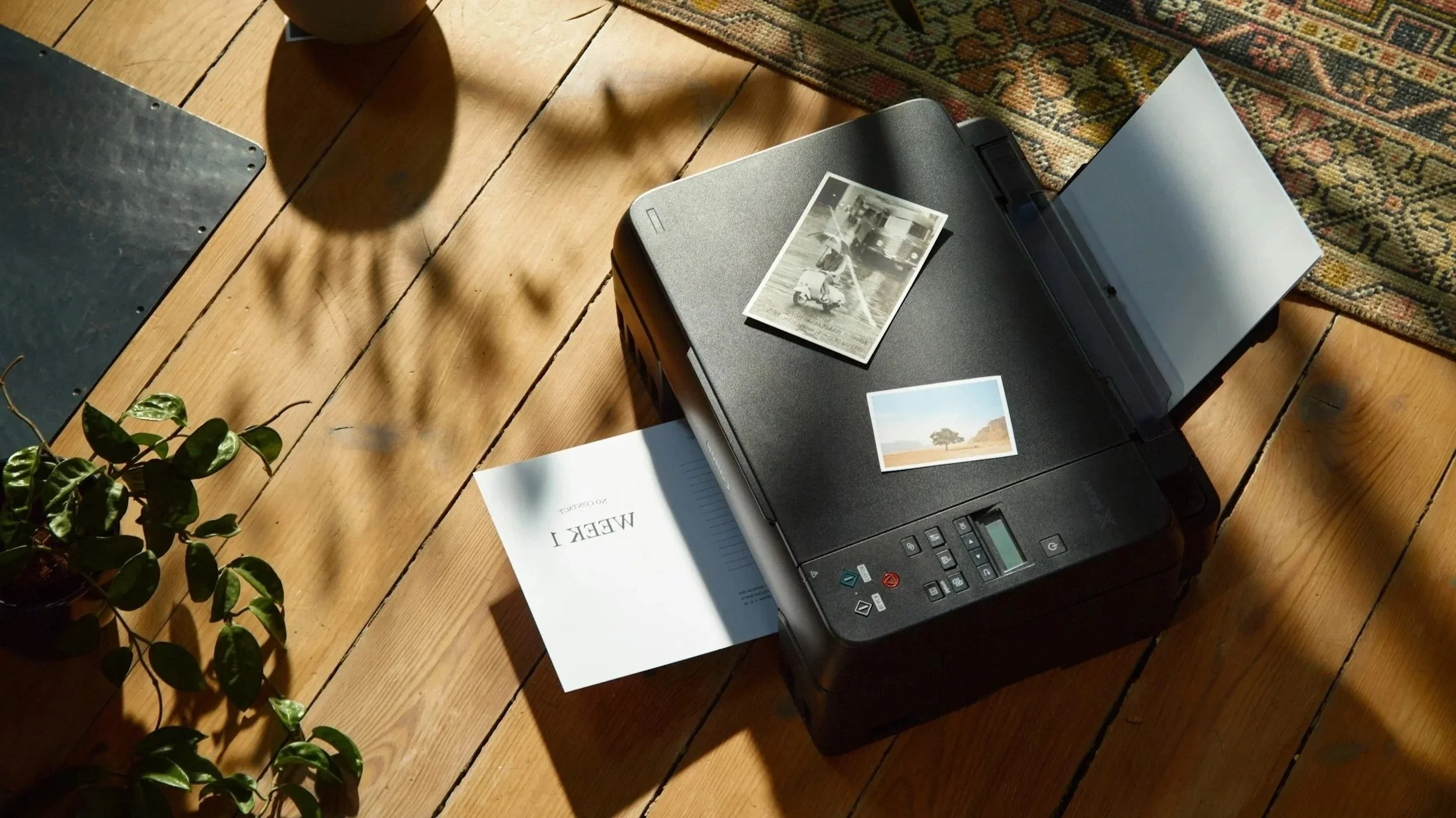
Paper Applications
Despite the huge investment in technology some applications still remain hard-copy based, requiring forms, print-outs and couriers.
A bank provides statements through an online portal. An accountant emails financial accounts. A lawyer sends a scanned document. A client uploads evidence to us electronically. We review it electronically, organise it electronically and prepare the written submissions electronically.
Then, because of the visa category involved, we print it.
The application must be assembled carefully, packaged and sent by courier. Someone must receive it, open it and then manually lodge it in to an electronic system. The documents must be moved, stored and eventually returned or securely disposed of. If INZ needs to work with the documents electronically, they may then need to be digitised again.
It is difficult to find the efficiency in taking information that already exists in digital form, converting it into paper and then potentially converting it back again.
There is also the simple problem of risk. Online filing provides an electronic record of what was submitted and when. With paper, the adviser must keep a complete copy, arrange secure delivery and track the package. A missing page, a photograph that becomes detached or a document placed in the wrong section can create questions that should never have arisen.
None of this means paper applications should disappear altogether, although increasingly they are. Some applicants are not comfortable with online systems. Others may have limited internet access or difficulty producing documents in the required digital formats. A paper option remains entirely reasonable. Making paper compulsory is the strange part, when it comes to just a small number of remaining applications and particularly the follow up requests for additional documents that INZ might have.
If INZ can accept an online Skilled Migrant Category application, an Active Investor Plus application and a wide range of temporary visa applications, it should be capable of receiving Parent and Parent Retirement applications in the same way. These categories involve different immigration requirements, but the basic administrative task is identical: receive information, assess evidence and make a decision.
This also creates a lot of somewhat absurd back and forth. We can file an Active Investor Visa online and then if INZ wants more information we can send that electronically as well. However for a Parent or Parent Retirement application, further information has to then be sent in hard copy as well. I have had some very bizarre conversations with INZ, requesting original, hard-copy versions of documents that should be accepted as electronic copies. After all if we can approve someone to invest NZD$5 million here, based on a PDF, why do we insist on making mum and dad file everything by courier.
The printer does not improve the evidence. The courier bag does not make the applicant more or less eligible. A stack of paper does not become more reliable simply because it is heavy. It is in fact just heavier.
Until The System Catches Up
The obvious solution is for INZ to finish the job and move these remaining categories online, while keeping a paper pathway available for people who genuinely need it. However there is also an alternative option that would solve a lot of these headaches in the meantime. The rules allow officers to waive certain documents or to accept them in digital form, and that discretion simply needs to be exercised across the board for these two categories that remain in the pen and paper age.
Doing this would save everyone a lot of time and simply mean that they treat these two applications in the same way as all the rest. This would fix the problem in the meantime, until the rules can be modified to catch up and then the actual applications rolled in to the bigger online system.
For Parent and Parent Retirement applications, careful preparation is particularly important, because they are filed in hard copy. A paper file needs to be complete, logically organised and consistent from beginning to end, or the risk is that INZ sends it back. Signatures must be in the right places. Time-sensitive documents must still be valid when the application reaches INZ. Financial and relationship evidence must tell a clear story, and the information in the forms must match the supporting documents.
Once the courier collects the package, correcting a preventable mistake becomes a lot harder to do. Filing something online, even if it is missing a document or two, doesn’t change the fact it has been filed.
We prepare these applications so that the immigration officer can understand the case without having to excavate their way through a small forest of paper. We check the eligibility requirements, identify gaps in the evidence and make sure the application is properly assembled before it leaves our office.
If you are considering a Parent Resident Visa or Parent Retirement Resident Visa, speak to us before you begin gathering and printing everything. The application process may be stuck in the past, but your preparation does not need to be.
Hopefully INZ will also bring these categories online before too long.
In the meantime, we will keep the ink and paper topped up.
Until next week.