
For most applicants, securing skilled employment in New Zealand is one of the most important parts of the process and so, to help you along that path, we have curated some valuable tips, advice and tools to help you land the right job. Please make sure you also discuss these details with your consultant - another key resource.





Immigration News and Opinions.

There is something rather fascinating about New Zealand's more recent approach to skilled migration. Every time we identify a problem with the system, we appear to introduce another pathway to try and solve it. We have points, qualifications, occupational registration, wages, work experience, occupation lists, lists of occupations that qualify and, increasingly, lists of occupations that don't.

I remember when I was younger, and the latest movie was being released at the cinema (yes I am showing my age) and we would all be filled with anticipation, waiting for the weekend to roll around. As you get older the things you eagerly anticipate tend to change although they come with just as much theatrical entertainment.

New Zealand has a rather interesting relationship with immigration. We need migrants to fill skill shortages, support businesses, contribute to our economy and, increasingly, help fund our international education sector. We spend considerable time and money promoting New Zealand as an attractive destination to work, study and potentially settle long-term, competing with other countries in the process.

I owe the inspiration for this article to an industry colleague, who discussed this same topic on LinkedIn recently and it really did get me thinking. There is something wonderfully predictable about immigration becoming a political talking point in an election year and there is enormous entertainment value in watching all of our political leaders suddenly realising they have the “secrete sauce” that will make our immigration system better, faster, and more valuable.

The Rolling Stones famously complained about their inability to get satisfaction and having read that line, you now probably have that song in your head. For many New Zealand visa applicants, that frustration will sound remarkably familiar to the tune, although the source of their dissatisfaction is very different.
ey do.
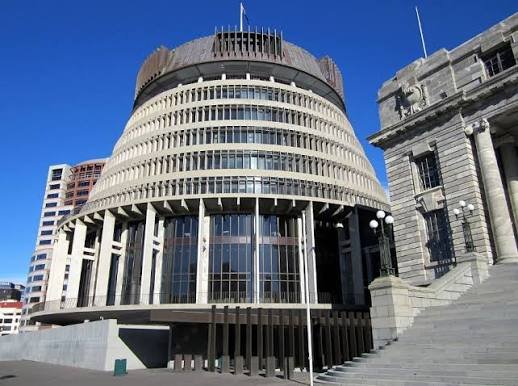
Dear Future Minister of Immigration
I do not know who you are yet. You may be the current Minister, still occupying the office after November election or you may be her replacement. You may come from National, Labour, ACT, New Zealand First, the Greens, or whoever else might end up in the political mix.
Whoever you are, this letter is intended for you.

If you are currently looking for a job in New Zealand, you probably do not need an economist or a subscription to the New Zealand Herald, to tell you that the labour market has been difficult. You already know how challenging it is. You know because you have probably applied for jobs and heard nothing back.

Moving countries, lock, stock and barrel is a fairly ridiculous way to find out whether you like somewhere. People sell houses, resign from jobs, pull children out of schools, say goodbye to family and ship the contents of their homes halfway around the world, often on the strength of social media commentary or the fact they enjoyed the Lord of the Rings movies.

With the Skilled Migrant Category changing repeatedly, and with further adjustments still likely, understanding whether you qualify today is only part of the picture. The more important question is whether the decisions you are making now are actually moving you towards residence.
Election years are not especially relaxing, especially if your future depends on immigration policy and whether a change in Government might influence that. A politician gives a speech about immigration being too high, another warns that the country needs to protect its social cohesion, someone else promises a tougher system.

Earlier this week, the ACT party announced that it wants to fundamentally reshape New Zealand’s residence system by removing the Permanent Resident Visa and replacing it with an ongoing requirement for residents to keep proving their connection to New Zealand. At first glance, there is a certain neatness to the idea.

This week the world farewelled a music legend - Dolly Parton, who died on 25 August at the age of 80. Much has rightly been said about her extraordinary career, her philanthropy, her humour and her ability to remain unmistakably herself through decades in an industry that is not always especially forgiving of that sort of thing.

Trust is a fairly important ingredient in an immigration system. Applicants trust that the rules published by Immigration New Zealand mean what they appear to mean (assuming they can interpret them). Employers trust that if they follow the process, pay the fees and provide the evidence requested, somebody at the other end will deal with it properly. Migrants hand over passports, medical information, police certificates, employment histories, financial records and increasingly biometric information, on the assumption that the government agency receiving all of this is competent, secure and properly managed.
Most of the time, we simply assume that it is, however revelations concerning Immigration New Zealand’s failed Biometric Capability Upgrade (BCU) project make that assumption worth looking at a little more closely. The BCU project began eight years ago, in 2018 and was intended to modernise the technology INZ uses to manage and match biometric information. After seven years of development, delays and mounting concerns, it was discontinued in December 2025 without delivering the intended new system or anything even remotely close to one.

Most days, preparing and filing a visa application looks and feels reasonably modern. We can lodge work visas online. We can lodge student and visitor visas online. Skilled residence applications are online. Even Active Investor Plus applications, involving significant investments and often substantial financial evidence, can be prepared, uploaded and submitted entirely electronically.
The documents are gathered digitally, reviewed digitally and filed through an online portal. The fee is paid online and the application arrives at Immigration New Zealand immediately. No anxious wait for a courier or relentless track and trace.
Then a Parent Resident or Parent Retirement Resident Visa application lands on our desk and we head back to the 1980’s. The online portal is replaced by a paper form, signatures need to be collected and originals or certified copies have to be bundled up before the application can be submitted.
New Zealand has always been reasonably good at selling itself as a holiday destination - it’s almost effortless. Spectacular scenery, friendly people, a reasonably relaxed lifestyle and the opportunity to explore a country that, for many international visitors, feels a world away from home.