Strap In For The Ride
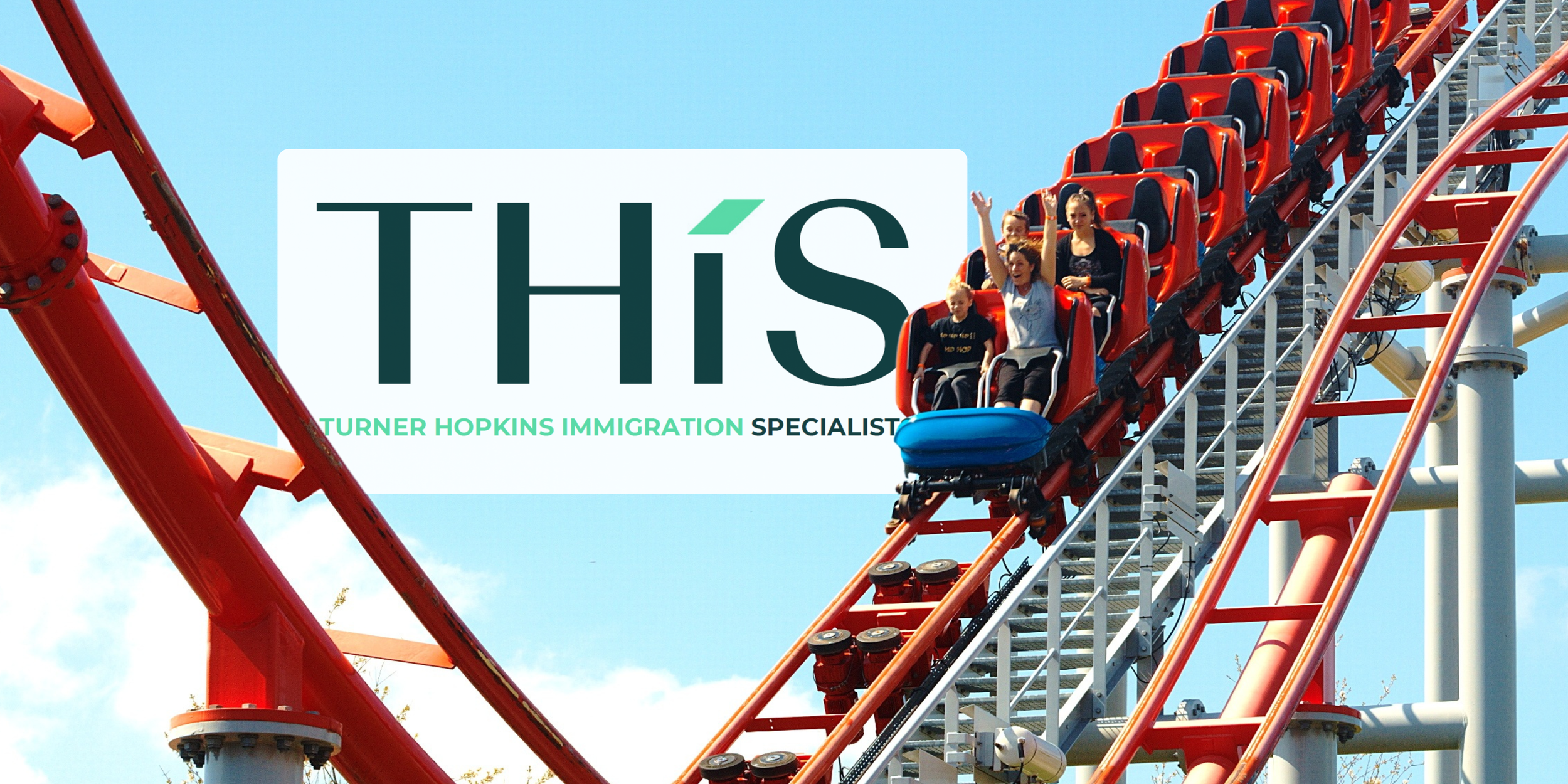
With the 2026 election now close enough to smell, it seems that politicians of all stripes have started discovering their deeply held views on pretty much everything, and as such immigration is once again being strapped into the front carriage of the election roller coaster.
ACT has recently released a fairly heavy immigration policy package, proposing a five-year welfare stand-down for new residence-class visa holders, a $6 daily infrastructure surcharge on temporary work visas, stronger English requirements, tougher deportation settings for serious offenders, and a dedicated overstayer enforcement unit. The policy is dressed in the language of fairness, contribution and shared values - which is political code for “we think this is an issue voters will engage with”. Ironically most of what they are proposing is being done already and the rest is policy you might draw up on the back of a napkin.
National, meanwhile, has been talking about a very different sort of immigration message, balancing the bottom line with social cohesion (whatever that means), painting the picture, that a slightly more austere approach is coming, and yet behind the scenes they are rolling out more SMC pathways to bring in more migrants.
And New Zealand First, never one to leave an immigration debate sitting quietly in the corner, has already broken with their coalition partners over those very same skilled migrant category changes, calling them “unfocused immigration”.
Tighten the rules. Open new pathways. Charge migrants more. Keep skilled workers. Crack down on overstayers. Help employers. Protect infrastructure. Grow the economy. Restore balance. Strap in folks, its going to be a wild ride.
For migrants, employers, investors students and anyone considering the move to New Zealand, it can all feel a little stomach-churning. One minute we are climbing slowly towards certainty and “better settings”. The next, we are plunging downhill into another announcement about “tightening up” and “getting tough”.
The good news? Immigration policy has always been a roller coaster and trick to not losing your lunch is staying on the ride until the very end.
The Political Spin
Every three years, as the billboards go up and politicians start pretending that they enjoy talking to people in high-vis vests, immigration gets dragged back onto the stage with varying degrees of spotlight being applied. Sometimes it is presented as the solution to our problems. Sometimes it is blamed for causing them. Quite often, it is pitched as both, depending on the day, the polling, and current unemployment statistics. We have seen this before, so many times.

Slogans Are Not Policy
In the run up to the election all political parties will have a “voice” on immigration, most of which will actually be quite far away from real, practical policy decisions.
In 2017, Labour campaigned on cutting net migration by 20,000 to 30,000 people a year, with a heavy focus on student visas, lower-skilled work and the idea that immigration settings had become too loose. It was a tidy political message - fewer migrants, less pressure, better outcomes. Of course, once in Government, the reality became a little slogan worthy. Employers still needed staff, regions still needed workers, and the economy still relied rather heavily on people from overseas turning up and doing all those useful things we enjoy the benefit of.
Then COVID arrived and rewrote the script for all political parties, completely. For a while, the border was not just tightened, it was effectively welded shut. Migrants who had been called “essential” one week found themselves separated from family, jobs and futures the next. Employers who had previously been told to look harder for New Zealanders suddenly found themselves looking very hard indeed, mostly into an empty room.
Once the borders reopened, the conversation changed again. Suddenly, the issue was not that too many migrants were coming in, but that not enough workers were available quickly enough. We then lurched from labour shortages, to record migration, to infrastructure panic, to “we need to restore balance”, which is one of those wonderfully flexible phrases that can mean almost anything while committing to almost nothing.
By the 2023 election, immigration had again become a political pick-and-mix. National talked about rebuilding the economy, fixing broken visa settings and getting international education moving again. ACT pushed parental visa ideas and broader changes. New Zealand First leaned into concerns about numbers, infrastructure, culture and who should be allowed through the front door. Labour, by then, was defending a system it had spent years reshaping, pausing, reopening and reshaping again. In other words, everyone had a turn on the immigration roller coaster.
This is also why immigration becomes such a useful political football. It can be kicked in almost any direction. House prices too high? Blame migration. Hospitals short-staffed? Recruit migrants. Wages too low? Tighten migration.
The problem is that election-year immigration debate is rarely serious for very long. It tends to become a convenient holding pen for every other problem we have not properly planned for. Rather than ask why we have not built enough houses, trained enough nurses, invested properly in infrastructure, planned for an ageing population, or created a coherent long-term population strategy, it is much easier to point the finger at the arrivals gate.
That does not mean migration has no impact. Of course it does. More people require more houses, more roads, more doctors, more classrooms and more planning. Pretending otherwise is silly. But pretending migrants are the cause of every pressure in the system is sillier still.
The truth, as usual, is far less useful on a campaign flyer. New Zealand needs migrants, but it also needs the infrastructure to support them. We need skilled workers, but we also need to train and retain New Zealanders. We need international students, but not low-quality education dressed up as a residence pipeline. We need businesses to access global talent, but not use migration as a substitute for decent wages, good training and proper workforce planning.
This is the grown-up conversation, we need to have. Unfortunately, grown-up conversations rarely fit neatly between a sausage sizzle and a televised leaders’ debate.
So instead, immigration gets turned into a roller coaster. One moment we are climbing towards promises of control, discipline and “getting settings right”. The next, we are dropping at speed into yet another announcement about new residence pathways, new sector agreements, new lists, new thresholds, new exemptions and new acronyms for everyone to pretend they understand.
And yet, beneath all the noise, the track is still heading in a fairly familiar direction: New Zealand needs people. It just prefers not to say that too loudly during an election campaign.
Spin vs. Reality
While everyone is busy screaming with their hands waving in the air, as the coaster heads in to the corners, the smartest people in the room (including well-informed migrants) are looking further down the track to see where this ride is heading. Despite all the political noise about tightening, balancing and controlling migration, the Government has announced further changes to the Skilled Migrant Category which, in practical terms, create more residence options, not fewer.
From 24 August 2026, two new SMC pathways are due to be introduced: a Skilled Work Experience pathway and a Trades and Technician pathway. Immigration New Zealand says these changes are part of a wider package intended to help employers retain skilled workers, support long-term economic growth and better recognise New Zealand qualifications. That is not a door being slammed shut.

We Need Migrants
For all the “tough talk” that elections bring, particularly in terms of immigration, the reality is that we still need people and we always will.
The Skilled Work Experience pathway is aimed at migrants in skilled roles who have at least five years of directly relevant work experience, including two years in New Zealand at 1.1 times the median wage. The Trades and Technician pathway is for specified trades and technician occupations, requiring a relevant Level 4 or higher qualification and at least four years of post-qualification experience, including 18 months in New Zealand at or above the SMC median wage.
These are not open-door settings, and nor should they be. But they do represent a significant broadening of the residence track for people who may not have fitted neatly into the current points-based system.
There are also some sensible changes around wage settings. Immigration New Zealand has confirmed that migrants will generally only need to meet the relevant SMC median wage threshold in effect when they start gaining skilled work experience, and then maintain at least that rate when applying for residence. There will also be a grace period where the median wage increases before the person starts work, provided they begin within five months of the work visa being granted.
For anyone who has ever tried to plan a residence pathway around a moving wage target, that is not a small thing. It is the difference between a system that gives people a fair shot, and one that moves the finish line just as they reach for it.
There will be red and amber occupation lists aimed at slowing down or even stopping some occupations from being eligible. Some occupations will be excluded from the new pathways and others will face additional eligibility requirements because of perceived immigration risk, including concerns about role inflation and fraud.
The current direction is not “fewer migrants full stop”. It is closer to “more of the migrants we think we need, in the roles we think matter, under rules we hope the public will tolerate”. That may not fit neatly on a campaign billboard, but it is far closer to the truth.
New Zealand is still facing long-term workforce pressures. We still have an ageing population. We still lose plenty of talented New Zealanders offshore. We still have employers who cannot magic experienced workers into existence just because a politician has stood in a factory wearing a borrowed hard hat.
The Government knows this. Employers know this. Migrants know this. Even the parties who campaign hardest on migration numbers usually know this, although some prefer to whisper it quietly when the cameras are pointing the other way.
So while the language may be about tightening, refining, recalibrating or “restoring balance”, the practical reality is that New Zealand continues to need skilled migrants, experienced tradespeople, technicians, health workers, educators, infrastructure workers, hospitality staff, care workers, tech specialists and people who are prepared to build lives here.
For the Prospective Migrant
Should you be concerned?
Election periods are noisy, and immigration headlines are especially good at creating anxiety. For anyone planning a move, already working in New Zealand, studying here, supporting migrant staff, or waiting for residence settings to settle, the uncertainty can feel very personal. A visa is not just a piece of paper (or a PDF in your inbox). It is a job, a family, a school place, a mortgage plan, a business decision, a farewell party, a one-way ticket, and in many cases, a very large emotional investment.
So when politicians start tossing immigration around like a campaign rugby ball, people notice, but the worst thing to do is sit frozen at the top of the roller coaster waiting for every twist and turn to be revealed. Immigration planning has always involved timing, strategy and a clear understanding of the rules as they exist now, not just the rumours about what might happen next. The opportunity is still there and by all accounts those opportunities are expanding.
New Zealand still needs skilled workers, experienced tradespeople, technicians, graduates, employers willing to invest in talent, and migrants who can build lives here and contribute properly. The language around immigration may get more pointed and heated, as the election gets closer, but the practical need for good people is not going away. So keep your arms firmly inside the carriage, and make sure you understand which track you are actually on.
If you are considering a move to New Zealand, already here and wondering whether you may qualify for residence, or an employer trying to keep valuable staff, now is the time to get proper advice. Election-year headlines are entertaining enough, but they are a very poor substitute for a plan.
Until next week!