Immigration News & Opinion

Elections and Immigration
Election years are not especially relaxing, especially if your future depends on immigration policy and whether a change in Government might influence that. A politician gives a speech about immigration being too high, another warns that the country needs to protect its social cohesion, someone else promises a tougher system. Headlines follow, social media does what social media does, and people who are halfway through planning a move to New Zealand start wondering whether the drawbridge is about to be hauled up.
With New Zealand voting on 7 November 2026, we are firmly back in that part of the political cycle. Immigration has become noticeably louder as a campaign issue, despite the July Ipsos Issues Monitor finding that only 8 percent of New Zealanders nominated immigration as one of the country's most important issues. Cost of living was sitting at 62 percent. Healthcare was at 38 percent and the economy at 34 percent. Immigration may not be keeping most New Zealanders awake at night, but it remains remarkably capable of finding a loudspeaker with a politician attached to the end of it.

The Permanent in Permanent Residence
Earlier this week, the ACT party announced that it wants to fundamentally reshape New Zealand’s residence system by removing the Permanent Resident Visa and replacing it with an ongoing requirement for residents to keep proving their connection to New Zealand. At first glance, there is a certain neatness to the idea. Permanent residents should permanently reside here - as the name suggests. Put the “reside” back into “resident”, as ACT puts it. It is a good slogan and it fits comfortably on a press release and plays well on social media. The problem is that immigration policy usually requires a little more thought than politicians have time for - particularly in an election year.
New Zealand’s current system makes an important distinction between a Resident Visa and a Permanent Resident Visa. A Resident Visa gives someone the right to live, work and study in New Zealand indefinitely while they remain here, but their ability to leave and return is governed by travel conditions. A Permanent Resident Visa removes those travel conditions and provides an indefinite right to leave and return to New Zealand. That permanent right of return is hard-earned and places us in a somewhat unique position in terms of the competition for talent and investment.

Working 9 to 5
This week the world farewelled a music legend - Dolly Parton, who died on 25 August at the age of 80. Much has rightly been said about her extraordinary career, her philanthropy, her humour and her ability to remain unmistakably herself through decades in an industry that is not always especially forgiving of that sort of thing. She was once quoted on NZ radio as saying she had to get rich, in order to sing like she was poor…I personally love that statement, being a very big music fan myself.
Beyond her musical legacy, Dolly also gave us perhaps the most famous shorthand for the working day: 9 to 5. More than 45 years after the song was released, we still use the phrase even though a very large number of people no longer actually work nine to five (or remotely near it).
That is particularly true for salaried professional employees and this is where the link between a country music legend and the NZ visa process will hopefully start to become clear.

Can You Trust The System?
Trust is a fairly important ingredient in an immigration system. Applicants trust that the rules published by Immigration New Zealand mean what they appear to mean (assuming they can interpret them). Employers trust that if they follow the process, pay the fees and provide the evidence requested, somebody at the other end will deal with it properly. Migrants hand over passports, medical information, police certificates, employment histories, financial records and increasingly biometric information, on the assumption that the government agency receiving all of this is competent, secure and properly managed.
Most of the time, we simply assume that it is, however revelations concerning Immigration New Zealand’s failed Biometric Capability Upgrade (BCU) project make that assumption worth looking at a little more closely. The BCU project began eight years ago, in 2018 and was intended to modernise the technology INZ uses to manage and match biometric information. After seven years of development, delays and mounting concerns, it was discontinued in December 2025 without delivering the intended new system or anything even remotely close to one.

Online vs. Paper
Most days, preparing and filing a visa application looks and feels reasonably modern. We can lodge work visas online. We can lodge student and visitor visas online. Skilled residence applications are online. Even Active Investor Plus applications, involving significant investments and often substantial financial evidence, can be prepared, uploaded and submitted entirely electronically.
The documents are gathered digitally, reviewed digitally and filed through an online portal. The fee is paid online and the application arrives at Immigration New Zealand immediately. No anxious wait for a courier or relentless track and trace.
Then a Parent Resident or Parent Retirement Resident Visa application lands on our desk and we head back to the 1980’s. The online portal is replaced by a paper form, signatures need to be collected and originals or certified copies have to be bundled up before the application can be submitted.

Health and Visas
I was almost going to change the title of this article, because I had published one previously (back in 2025) with the same name. However it felt right to keep it, and the content is vastly different. The last one was about decision timeframes, but this one is a little more of a walk down memory lane with the Skilled Migrant Category (SMC) as the backdrop.
Considering we have another round of changes to the SMC coming up in just under a month’s time, it felt about right to take stock and think about how far this category has come, where it stands now (or will stand in a few weeks) and where we might be headed. The SMC is the backbone of our immigration system, generating the long-term skills and contributions our future needs, and it has had an interesting history (even if you don’t follow immigration trends).

Room For Mum & Dad?
For many migrants, securing New Zealand residence is not quite the end of the journey and often it is part of a much bigger plan to reunite the whole family in New Zealand. Parents are often part of plan for the overall move, and obviously the options that exist for them are a key part of the decision making process. I regularly consult with hopeful skilled migrant, where the end of the discussion naturally turns to what options might exist for mum and dad - which makes a lot of sense, particularly if the family has operated as close-knit unit in the run up to the big move.
Parents (grandparents) can provide childcare, emotional support, cultural connection and the sort of unsolicited practical advice that apparently remains compulsory regardless of how old their children become. For many families, having parents nearby is an important part of genuinely being able to settle in New Zealand.
We are a little less enthusiastic when those same people need somewhere to live, drive on the motorway, enrol their children at school or appear in the latest migration statistics. We tend to like what migrants do. We are sometimes less certain about the migrants themselves. We see this regularly in online commentary, particularly around election time.

Immigration: All Care, No Responsibility
New Zealanders have a slightly complicated relationship with immigration. We want all the benefits that migrants bring - skills, investment, family connection and yet we aren’t that keen on the actual concept of migration itself. We want the doctor to help speed up appointment times, the nurse looking after us in hospital, the builder constructing the houses we are short of, and the engineer repairing the infrastructure we failed to maintain.
We are a little less enthusiastic when those same people need somewhere to live, drive on the motorway, enrol their children at school or appear in the latest migration statistics. We tend to like what migrants do. We are sometimes less certain about the migrants themselves. We see this regularly in online commentary, particularly around election time.

The Power Of Relationships
When I started in this industry (well over two decades ago), things worked very differently - all applications were paper-based, meaning you had to physically courier your documentation, forms and fee to INZ for them to the create a file and eventually process the application.
INZ would send decision letters to applicants in the post and letters of concern would also be sent by hard copy. Whilst it was slow and somewhat tedious, it was how things were done and despite the sluggish pace of things, visas were issued and in fact we had a lot more engagement with officers, over the phone.

The Cost of Migrating
There has been a bit of news recently (on the migrant social media network at least) in relation to Australia lifting it’s visa application fees…and to be fair, we had the same conversations here in NZ when we did the same in 2024. Comparatively New Zealand is pretty good value compared to Australia - a partnership resident visa application here will set you back NZD$5,360.00, whereas in Australia, that will lighten your wallet for AUD$11,710 (nearly three times the NZ equivalent). Skilled applications are not much better - a family of four are paying AUD$12,275 and here in NZ, you would be paying NZD$6,450 for the same number of people.
The simple fact is that immigration has become more expensive, partly because there is a greater level of technology being used in the process (and that has to be paid for) but also because there has been an increase in verification needed to ensure applicants are above board. Most countries also see the immigration process as less of a public service and more of a cost centre, where applicants are expected to pay for the service (service is a relatively loosely used term of course).

The New SMC Is Here…So What’s Next?
Last week we looked at the newly released Skilled Migrant Category rules in some detail. Possibly more detail than some readers expected, wanted, or felt mentally prepared for - but necessary detail nonetheless, given the significance of those changes.
That is the problem with immigration policy. it rarely rewards a quick skim. It tends to sit quietly in the background, until someone realises that one word, one date, one wage rate, or one job title could change the outcome of a residence application.
SMC Rules Released. Finally.
The policy folks have had the hammers, saws and masking tape out again, and the new Skilled Migrant Category rules have now, finally, been released. They are not quite live yet - the official start date is 24 August 2026 - but we now have the final version of what is coming, and there is quite a bit for migrants, employers and advisers to get their heads around.
In broad terms, INZ is adding two new residence pathways alongside the existing points-based system: one for people with significant skilled work experience, and another for people in trade and technician roles. That sounds sensible enough, particularly given the long-standing need for experienced practical workers across New Zealand. But, as always, the detail matters.

The Active Investor Visa
he Active Investor Visa is hitting its strides, having been in operation for just over 12 months. This is of course the reinvented and highly modified version of the policy that was rolled out by the Labour Party previously. That earlier version was overly complex, too restrictive and required a degree in quantum physics to operate.
The new system, released by the current Government, with input from stakeholders, is far simpler overall (although it actually does get a bit more complicated in terms of the steps required) and gives interested applicants a reasonably clear way forward in terms of working out their eligibility.

Everyone’s An Expert
I have written recently about the fact that immigration has taken centre stage as of late and largely based on the fact that we are now just five months from our national elections. Immigration is one of those topics that gets good headlines and soundbites, so we can expect more news to surface before the polling booths open.
However along with the political commentary, largely to drive votes, there is also the gradual rise of the armchair experts, many of of whom surface to add their weight to that commentary. It’s not only elections that surface these individuals and more recently, we have seen plenty of these folks popping up in relation to the active investor visa - particularly in terms of where the money should be flowing.

Why Are Visa So Complicated?
Immigration New Zealand’s website does a pretty good job of making visa applications look manageable or even easy. Choose the visa you think you need, read the checklist, gather and upload the documents and then finally pay the fee and nervously hover over the submit button, before you pull the trigger. Once submitted you then have to try not to check your inbox every twelve minutes. On the surface, it can look a bit like shopping for something on Temu.
A visa application however is not just an administrative exercise in form filling, instead it It is a legal decision-making process dressed up as an online portal. INZ’s website is designed for public use, and is one part rules and another part marketing, so obviously it has to keep things pretty simple. That is fair enough. Nobody wants to be greeted by a 400-page policy maze before breakfast. However, the problem is that the simplified version of what is a really complex process can give applicants the impression that the test is whether they have uploaded the right file in the right box.

Study Your Way To NZ
Immigration is back in the spotlight as we round the bend towards the 2026 general election. On both sides of the debate, the impact, benefits and consequences of our immigration system are being highlighted - largely because as a topic it gets people interested and it can generate votes.
Student Visas and our export education sector however have also surfaced in recent news media, and not as part of the political back and forth specifically but in terms of a bit of a surge in numbers.

Strap In For The Ride
With the 2026 election now close enough to smell, it seems that politicians of all stripes have started discovering their deeply held views on pretty much everything, and as such immigration is once again being strapped into the front carriage of the election roller coaster.
ACT has recently released a fairly heavy immigration policy package, proposing a five-year welfare stand-down for new residence-class visa holders, a $6 daily infrastructure surcharge on temporary work visas, stronger English requirements, tougher deportation settings for serious offenders, and a dedicated overstayer enforcement unit. The policy is dressed in the language of fairness, contribution and shared values - which is political code for “we think this is an issue voters will engage with”. Ironically most of what they are proposing is being done already and the rest is policy you might draw up on the back of a napkin.

Citizenship Test
In terms of immigration and the news, it always amazes me as to what attracts headlines and what seemingly fades out of view very quickly. We have had two major announcements over the last six months in relation to a fairly major change to our Skilled Migrant Category - those got some attention, but within a few hours, the only people talking about them were advisers.
This week, the current coalition Government announced a multi-choice quiz to be introduced as part of our citizenship application process and everyone has gone a bit nuts. Some are calling this “an attack on migrants” (a bit extreme) and others are saying this is nothing more than click-bait and a vote grab. As usual the answer is probably closer to anything political than any sort of deep dark conspiracy against migrants.
The Population Squeeze
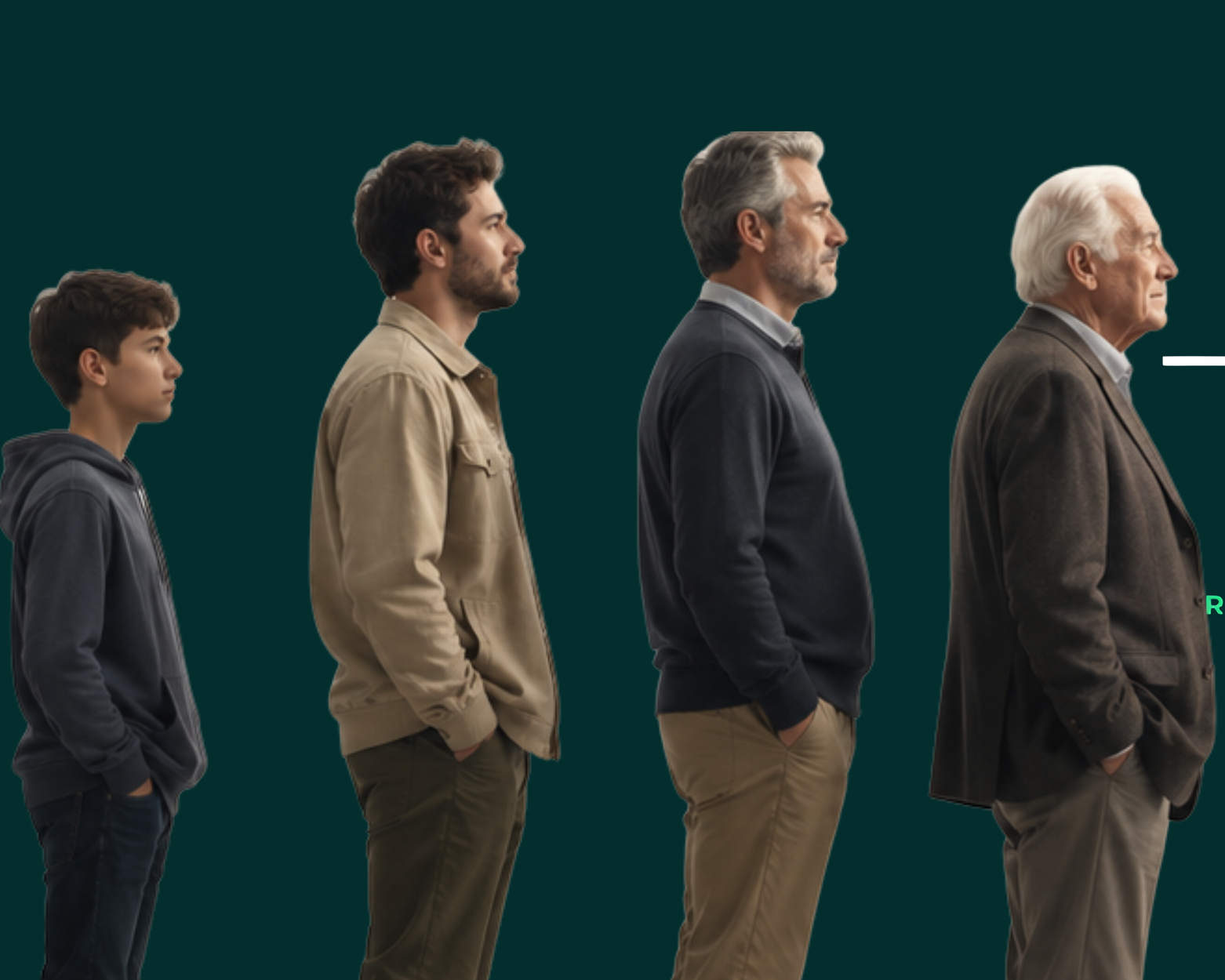
New Zealand is getting older, and not in the “we all need a stronger coffee and a better mattress” sense, but in the very real and slightly alarming demographic sense, that will shape our workforce, tax base, health system, regional growth and national economy for decades to come.
A recent and report by Sir Peter Gluckman and emeritus professor Paul Spoonley, highlighted what many policymakers already know but few seem willing to confront with any real gusto - New Zealand’s population is ageing, birth rates are falling, and the number of working-age people available to support the wider population is coming under significant pressure. This is not simply a pensions issue, or how many gold cards we might need to dish out in the next decade or two, and it is not just a health-sector issue either. It is certainly not just an immigration issue. It is a much bigger and much more pressing national planning issue.

Visas, Politics and Butter Chicken?
You might be wondering what the connection between visas, politics and butter chicken could possibly be, although if you are already in New Zealand, those dots might join up a little quicker. For those of you who aren’t or at least don’t follow our mainstream media here, the link is all thanks to one of our more vocal politicians - the Honourable Shane Jones.
Known for his ability to provoke and to deliver his opinions fairly bluntly, Mr. Jones recently compared our soon to be signed, free-trade deal with India, as a "butter chicken tsunami" making its way to New Zealand. The provocative imagery being his rather creative (and poorly chosen) way of raising concerns around the visa and immigration components of that free-trade deal. Like most free trade deals we sign, the movement of people and access to visas, for the partner country, is a part of the negotiations.