
The Power Of Relationships

When I started in this industry (well over two decades ago), things worked very differently - all applications were paper-based, meaning you had to physically courier your documentation, forms and fee to INZ for them to the create a file and eventually process the application. INZ would send decision letters to applicants in the post and letters of concern would also be sent by hard copy. Whilst it was slow and somewhat tedious, it was how things were done and despite the sluggish pace of things, visas were issued, people migrated and there was a far greater level of engagement between INZ and licensed advisers (admittedly the industry was also a lot smaller).
Relationships were built in that process, because you had to often speak to officers or managers to discuss complex situations or navigate policy and in fact I still have many of those relationships with INZ, intact, and in place today. Of course, gradually the use of electronic communications took hold and created a far more efficient process, but at the same time, those relationships moved away from calls on the phone or face to face meetings, to a flurry of emails. The upside was things moved more quickly, but the downside was less and less engagement with officers - ironic in a situation where the process is all about people.
Fast forward to the modern immigration era and applications are predominantly filed online, with applicants accessing everything through an online portal. INZ are gradually moving towards generic, group email inboxes and knowing who to speak to has become increasingly more difficult. While the Covid era forced us all to become more digitally proficient, it also had the impact of making more and more people reluctant to pick up the phone.
While I am a big fan of technology and innovation, personally I feel we have also lost something along the way in our pursuit to automate everything, something that actually makes the system work more efficiently, despite it being a little old-fashioned.
A Lost Art?
One of the things I speak about quite regularly with my industry colleagues is the benefit of building good relationships with INZ. It takes time to do that of course, so being around for more than two decades helps, but many new advisers forget how important these relationships can be and how crucial it is to start building them, from the very first day you enter the industry. When things don’t go according to plan or an application jumps off the rails, being able to call a human being within the machinery of INZ can be an incredibly powerful way of getting to the right resolution quickly.
For some advisers, particularly those newer to the profession (or perhaps in a younger generation - can I say that?), the idea of picking up the phone can feel uncomfortable, or even awkward. There is often a perception that contact with INZ must be formal, guarded, or in writing and a phone call seems pretty alien to what is often an arms-length process. Sometimes it pays to have a discussion or debate recorded, but a phone call to figure out the issue, followed up by a quick summary email can be far more effective.
Sometimes an adviser needs to challenge a decision, push back on a misunderstanding, or carefully explain why a particular interpretation of the instructions is not quite right and doing so over the phone is a far more effective method than a long game of email tennis. I am often surprised by how much my impressions of an immigration officer change when I speak to them, as compared to only ever seeing their email persona.

Communication
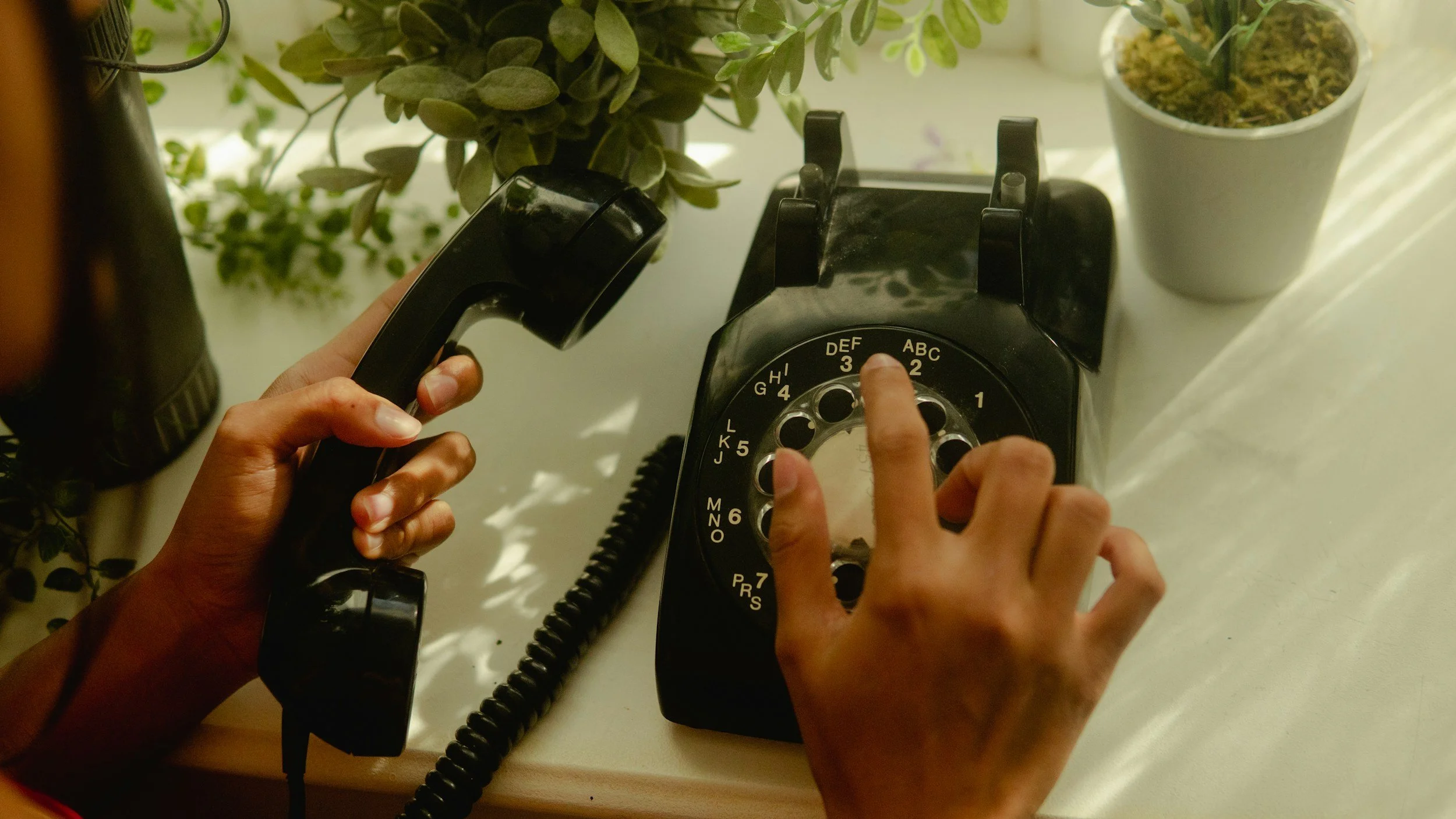
Communication has changed since Covid, but when it comes to getting things done, nothing beats the power of a phone call.
The most effective advisers I know tend to have something in common. They understand the rules, prepare properly, communicate clearly, and treat the people inside the system with respect - that includes being able to engage with them verbally, rather than just electronically.
A good relationship with a case officer is not about getting special treatment either. It is about building professional trust and just being a bit more human. When immigration officers know that you are reasonable, can be approached for comment and will advocate sensibly, you can get a lot more done. If they know the adviser is not going to waste their time, bury weak arguments in noise, or send twenty-seven follow-up emails before lunch, that’s pretty helpful as well. Over time, establishing that level of credibility and professionalism becomes a practical tool. I have made that a firm part of my practice, so much so, that it enables me to speak to far more senior people, which in turn gives me a good insight as to how the system operates. I also try and pay that back, by relaying industry concerns back to INZ as well. Dare I say it, but its almost a symbiotic relationship.
It also means that when you do need to raise an issue, your email is more likely to be read carefully. When you ask for clarification, it is more likely to be understood in context. When you say there is a genuine problem with a file, there is a better chance the person receiving that message will accept that you are not simply complaining.
It is also something applicants rarely see from the outside. They see the forms, the checklists, the document requests and the waiting. What they often do not see is the quiet communication that can sit behind a well-managed application - the email that clarifies a concern, the phone call that avoids a misunderstanding, or the careful explanation that helps an officer see the issue in the right context.
Over the years, I have solved many a problem with a phone call to INZ. Not because I am able to bend the ear of anyone, or have some sort of hotline to the right person, but having established good relationships with the right people over time, I would like to think that when I make that call, INZ appreciates there is a good reason for it. Ironically while INZ has moved steadily towards a more digital system with less human interaction, the power of a phone call is slowly becoming more apparent to them as well.
Old Fashioned Approach
I have always believed that old-fashioned professional habits still have a place in the modern, and very digital world of immigration and that the simple act of picking up the phone to discuss an issue can make a significant difference to how quickly and efficiently an application can be processed.
A couple of years ago now, I was involved in a pilot programme with INZ that encouraged officers to pick up the phone more often, instead of sending out formal letters requesting additional information. The idea was simple enough: in some situations, a short conversation could resolve an issue far more quickly than another formal letter, another written response, another delay, and another layer of anxiety for the applicant (and adviser).
Professional Partnerships
Some advisers take a more adversarial approach to INZ, yet they are just people doing a job. Sometimes a more balanced approach will get you a lot further.
This pilot also involved me meeting with INZ officers to explore how all of that could work in practice and whether it would be beneficial. It was fascinating to see how most officers would actually prefer to either send a quick email for a quick query or pick up the phone and have a chat with the adviser.
The time taken to do that, was far less than to populate a formal letter, when you might only be asking for a clearer copy of a passport or some additional evidence of relationship.
This approach may sound (particularly to the younger generations) old-fashioned, but it works. In fact, it often works because it is old-fashioned. It reintroduces judgement, context and common sense into a process that can otherwise become very transactional. I am hopeful that the pilot develops in to something more and so far the signals from INZ are that it will.
The same principle applies to maintaining relationships with senior INZ officials. Those relationships do not mean every concern or issue is magically solved. That is not how the system works, and it is certainly not how it should work. However being able to at least air the problem, to get a better perspective can often help the applicant with their next attempt to secure a visa, or shed light on a bigger potential issue.
When advisers and senior officials can speak openly about recurring problems, processing issues, policy interpretation, operational bottlenecks or unintended consequences, the system has a better chance of improving. Not always quickly. Not always neatly. But better than if everyone sits in their own corner sending increasingly frustrated emails into the void or complaining loudly from social media. That kind of relationship is particularly important in immigration, because the stakes are high - for everyone.
For applicants, a visa decision can affect where they live, whether they can work, whether their family can stay together, and how they plan their future. For employers, it can affect recruitment, workforce planning and business continuity. For advisers, it is our job to guide those people through the process properly.
That often requires more than knowing where to upload the passport scan, but absolutely requires advisers to understand how to effectively communicate with the person at the other end of the application, responsible for making the final decision.
Making The Right Call
For people applying for visas, the value of this approach is not always obvious at the beginning. Most applicants understandably focus on the visible parts of the process. What documents do I need? How long will it take? What are my chances? What will it cost? Those are all sensible questions.
But there is another question that is just as important: who is guiding the application? Immigration advice is not only about filling in forms or uploading evidence. A well-prepared application needs to anticipate the issues before INZ raises them. It needs to present the facts clearly. It needs to understand the policy, but also how that policy is likely to be applied in real life, by a real human being at the other end.
If something does go wrong, or if INZ raises a concern, it helps to have an adviser who can respond with clarity rather than panic. Relationships do not replace good evidence. They do not rescue weak applications. They do not allow anyone to skip the rules. But when used properly, professional relationships between advisers and INZ, can help ensure that an application is understood, that issues are communicated clearly, and that avoidable misunderstandings do not become unnecessary problems.
After more than two decades in this industry, I have learned that immigration work is rarely just about the forms in front of you (or on a screen). It is about the system around it, the people inside it, and the relationships that help make that system function a little more sensibly. Technology will keep changing and online systems will keep expanding. Emails, portals and automated messages are not going anywhere in a hurry.
But sometimes, the best tool available is still a clear explanation, a professional relationship, and a well-timed phone call. Old-fashioned? Possibly. Effective? Absolutely.
Until next week.